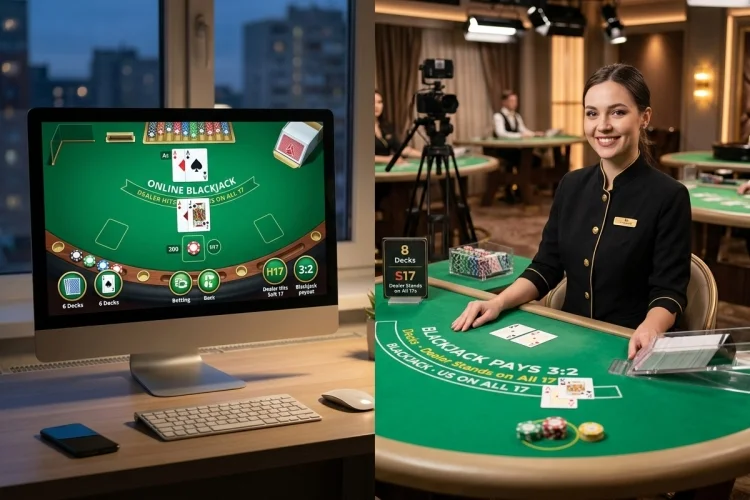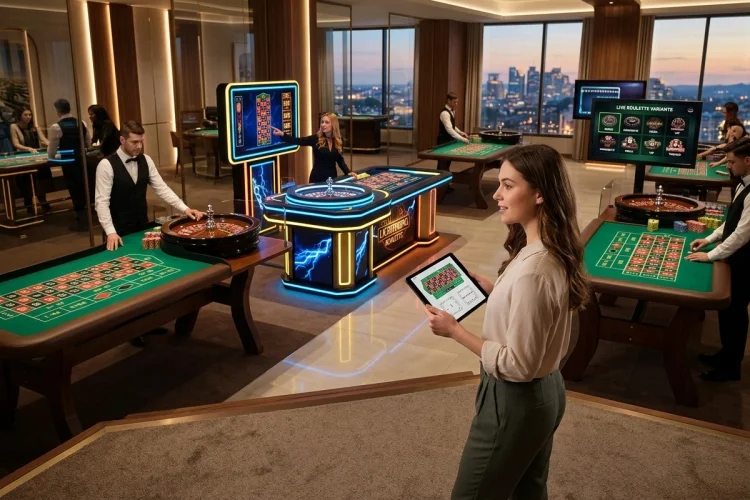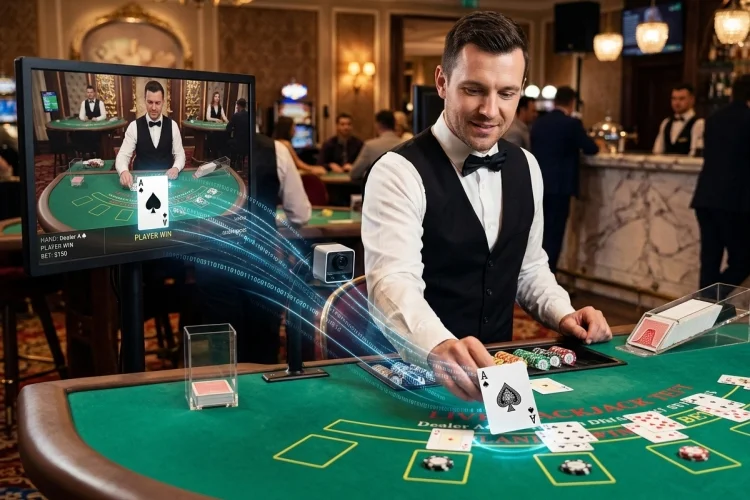
Live casino games look simple from the player’s side. You choose a table, place a bet, watch a real dealer handle physical equipment, and see your result appear on screen seconds later.
Behind that smooth experience is a constant exchange between video and data. One technology helping connect those two worlds is OCR.
Understanding How Optical Character Recognition Works reveals how a physical card can become a digital value, how software follows a live game in real time, and why recognition, synchronization, logging, and human supervision all matter.
Live Casino Games Have Two Versions of the Same Event
When a dealer reveals a card, two things effectively happen.
First, there is the physical event visible on camera. Second, the digital casino platform needs information describing that event.
The player’s interface cannot calculate a blackjack total simply by “watching” a video in the way a person does.
It needs structured data.
That is where OCR enters the system.
Gaming Laboratories International explains that physical live dealer events can be translated into information usable by gaming software through optical character recognition technology.
The software therefore receives a machine-readable representation of what occurred physically.
How the Recognition Pipeline Begins
Every OCR process starts with an image.
In general computing, OCR software can examine images or scanned material and identify visual patterns representing text or characters.
IBM describes it as a method of extracting information from camera images, scans, and other image sources and converting it into machine-readable data.
At a live casino table, the environment is far more controlled than an ordinary photograph.
Cards appear in known areas. Lighting can be standardised. Cameras remain in fixed positions. The range of possible values is limited.
All of those conditions make it easier to build a specialised recognition system.
The technology can therefore focus on a predictable visual environment instead of trying to interpret anything that might appear in a random photograph.
From Card Image to Game Value
Imagine a baccarat dealer reveals an eight.
The camera captures the relevant image.
The recognition system analyses visual characteristics and associates them with the corresponding card information expected by the game.
That result then becomes digital input.
The important part is that the software no longer sees only pixels. It now has a usable value that can be connected to the game round.
This is broadly similar to document OCR converting a photograph of printed words into data, but the casino application works inside a tightly defined gaming context.
A well-designed system needs to perform this process quickly enough that players do not notice a major gap between the physical reveal and the digital display.
Why Controlled Studio Conditions Matter
OCR accuracy depends heavily on the quality of its input.
Blurred images, reflections, inconsistent lighting, or obstructed cards could make automated recognition more difficult.
Professional live dealer studios therefore have reasons to maintain carefully controlled table environments beyond simply making the video attractive.
Regulated British live dealer standards require commercial-casino-quality equipment, trained dealers, operational supervision, video surveillance, controlled access, and integrity monitoring.
Those rules are broader than OCR itself, but they show why the environment around live game technology matters.
Recognition is more reliable when equipment and procedures behave consistently.
This is very different from attempting to recoginse card values from an unpredictable handheld video.
OCR Feeds the Digital Game Interface
Once the physical event becomes data, the player’s interface can react.
Imagine a blackjack player has a nine and receives a seven.
OCR-related recognition provides the card information, while the game software can use that information to update the displayed hand total to 16.
The software may also enable the appropriate next actions based on the state of the game.
OCR itself does not decide whether the player should hit or stand.
It simply supplies information about what happened at the physical table.
That separation is useful because recognition, game logic, video transmission, betting, and account settlement can each be managed as distinct parts of the system.
Together, they create the illusion of one simple live experience.
Bet Settlement Happens After Recognition
Consider a live baccarat round.
Players place bets before the betting window closes. The dealer then deals the physical cards.
Once those card events have been captured and converted into data, the platform can determine the final result according to baccarat rules.
The system then compares that outcome with each player’s recorded wager.
Winning and losing bets can be settled accordingly.
Under UK technical standards, gambling systems should accept, process, and settle bets according to published rules and game conditions.
This highlights an important distinction.
Recognition produces data. Game logic interprets it. The account platform handles settlement.
Those stages happen rapidly, but they are conceptually seperate.
Why OCR Is Different From RNG Technology
Live casino discussions often mention both OCR and RNG, but the terms should not be mixed together.
A random number generator is generally used to produce random outcomes in fully digital casino games.
OCR is recognition technology.
In a conventional live blackjack game, the cards are physically handled at the table. OCR helps convert those real events into digital information.
GLI specifically describes live dealer games as having outcomes determined through real-world actions rather than the automated RNG-driven outcome determination commonly used in virtual gaming.
That does not mean every modern live-style product uses identical technology.
Different game formats can use different combinations of physical equipment and digital systems.
But for a traditional live dealer table, OCR’s job is primarily observation and conversion rather than random outcome generation.
Speed Matters, but Synchronization Matters More
Players naturally want live games to feel immediate.
However, showing information quickly is not enough. It also has to appear at the correct point in the game.
Suppose the digital interface updated a card before the video showed the dealer revealing it. That could make the stream feel unnatural.
If it updated far too late, players might wonder whether the system missed the card.
The video stream, recognised data, betting window, game state, and player interface therefore need close coordination.
GLI’s testing framework for live dealer systems includes synchronicity testing alongside technical and system evaluations.
The goal is a consistent sequence where the physical and digital versions of the round match.
OCR Also Supports Game Records
A live casino round creates more than a temporary visual experience.
The gaming platform may need records showing what happened.
UK standards require regulated live dealer operations to maintain game logs and collect game-event information that can be analysed for trends. They also require sufficient video surveillance to confirm whether game rules and dealing procedures were followed.
OCR helps turn physical activity into structured data that can support that wider record.
This can be useful when investigating unusual situations.
Instead of relying only on someone’s memory, an operator can potentially review multiple information sources, including game records and video.
That makes digital recognition important for auditability as well as speed.
What Happens During a Technical Error?
Consider a card being dealt correctly but the player interface displaying an unexpected value.
A regulated operation needs procedures for handling that problem.
The UK Gambling Commission states that operators should take reasonable steps to ensure games operate according to published rules. When system errors affect customers, the issue should be addressed and incorrectly settled transactions corrected where appropriate.
Live studio surveillance can provide additional evidence when investigating what physically happened at the table.
This is one reason OCR should not be imagined as a standalone black box.
It operates alongside video systems, game logs, trained staff, monitoring tools, and operational controls.
Why Security Matters Around OCR Data
Once game events become digital information, they need to travel through electronic systems.
Those systems may interact with customer wagers, balances, authentication information, and game records.
Security therefore matters far beyond the camera itself.
The UK Gambling Commission applies information-security requirements to critical remote gambling systems that record, process, transmit, or retrieve sensitive information. Its current framework uses relevant controls based on ISO/IEC 27001:2022.
A live casino is therefore both a physical production environment and a digital information system.
The impressive part is how invisible most of that infrastructure feels when everything is working correctly.
OCR Makes Physical Games Usable Online
The biggest value of OCR is not that it makes cards easier to see.
Players can already see them through the stream.
Its real value is converting visual events into structured information that software can understand.
That information can update hand totals, follow game progress, support settlement, populate records, and keep the digital interface connected to the real table.
Without some form of reliable event conversion, a livestream would largely remain just video.
OCR helps transform that video-based experience into an interactive online game.
That is the tecnical bridge that makes the technology so important.
Understanding How Optical Character Recognition Works shows why live casinos are more than video streams.
OCR converts physical table information into digital data, while separate systems manage game logic, settlement, synchronization, security, and records.
When watching a live card game, remember that every physical action must also become usable digital information before the interface can respond accurately.