
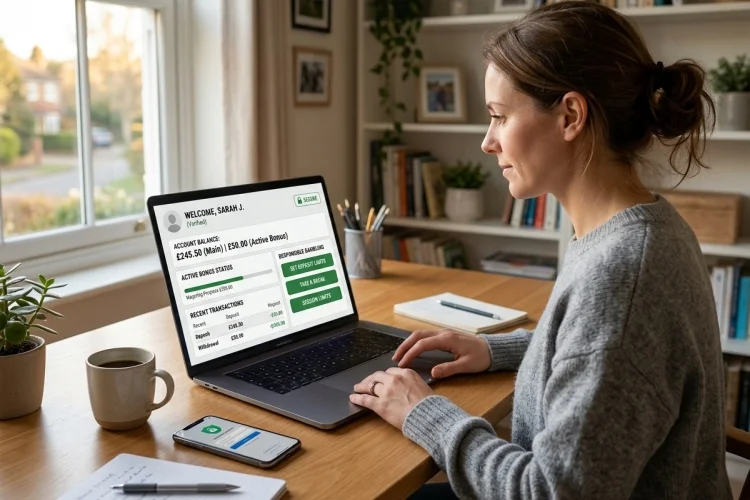
A well-managed online casino account should make important information easy to find. Its dashboard should show who owns the profile, how much cash is available, whether bonus conditions are active, which payments are complete, and what limits protect the player.
Learning how online casino accounts work is therefore not only about registration. It also means knowing how to use the profile after approval.
Players who ignore the cashier, transaction history, security settings, or promotional terms may misunderstand their balance or struggle to explain a payment problem.
Licensed operators use accounts to organize real-money activity and meet regulatory obligations. Players can use the same tools to monitor spending, secure access, and take breaks.
Features vary between jurisdictions, but the practical principles remain similar: keep personal information accurate, protect login details, understand every balance, and review activity regularly.
This guide explains how to manage the main account areas while remembering that gambling is entertainment, not a reliable way to make money.
Check the Profile and Operator Details
The profile normally contains the account holder’s name, address, date of birth, contact information, currency, and communication preferences. Outdated details can cause problems when the casino compares the profile with identification or payment records.
Players should also verify the operator’s licence through the regulator named on the website. MGA rules require licensed sites to display licensee details, an underage warning, responsible gaming information, and access to support measures.
A licence logo should lead to information that can be independently checked. Players should avoid depositing when the licence number, company name, or regulatory jurisdiction cannot be confirmed.
Understand Cash and Bonus Balances
The largest number displayed may not equal the amount available for withdrawal. Dashboards can separate cash, bonus credit, pending wagers, locked funds, and pending withdrawals.
Cash generally consists of deposits and eligible winnings. Promotional credit follows separate rules and may expire or be removed when its conditions are broken.
Before accepting a bonus, identify wagering requirements, eligible games, contribution rates, maximum bets, and expiry dates. Knowing which balance is used first prevents surprises when requesting a payout.
Review Transaction and Gaming History
Account history is useful for more than disputes. It can reveal repeated deposits, cancelled withdrawals, total session spending, and long-term results that are easy to overlook while playing.
New Jersey internet gaming rules require account statements containing details such as deposits, withdrawals, win-loss statistics, balances, and responsible gaming limit history. MGA requirements also provide access to recent gambling records.
Review the history after each session or at least weekly. Compare total deposits with total withdrawals rather than focusing on a single win.
Prepare Early for Withdrawals
Payment problems often begin before a withdrawal request. A name mismatch, third-party payment method, unfinished verification, active bonus, or unsupported banking option can lead to additional review.
UK-licensed operators must verify identity before gambling and should not delay information requests until withdrawal when the checks could reasonably have been completed earlier. New checks may still be required for another legal obligation.
Complete verification early, use payment methods in your own name, and check minimum payout amounts, processing stages, and possible fees.
Protect Login Access
Use a long, unique password that is not shared with email, banking, shopping, or social accounts. A password manager can help store different credentials securely.
Activate multifactor authentication when available. MFA requires an additional form of proof and provides stronger protection than relying only on a username and password.
Never disclose verification codes to someone claiming to be support. Avoid unexpected login links, sign out on shared devices, and report unfamiliar activity through the operator’s official contact channel.
Set Limits and Know How to Stop
Depending on the platform, customers may be able to restrict deposits, spending, losses, or playing time. A limit is most useful when chosen before a session begins.
UK standards require financial-limit controls to be accessible from registration and deposit areas. Customer-led increases require a cooling-off period of at least 24 hours, while reductions should normally apply immediately. A limit is a ceiling, not a target.
Time-outs, self-exclusion, and ordinary closure are different actions. MGA guidance requires accessible self-exclusion and says excluded customers must still be able to withdraw remaining funds.
Support should clarify whether the restriction covers one brand, several related brands, or selected products.
Understanding how online casino accounts work gives players greater control over personal data, money, and access.
The most important areas are the profile, cash and bonus balances, activity history, withdrawal center, security settings, and responsible gambling controls.
Manage the account before a problem appears. Keep personal details accurate, finish verification early, use a unique password, enable multifactor authentication, and inspect deposits and withdrawals regularly.
Establish affordable limits before playing and use a time-out or self-exclusion when control becomes difficult.
Before depositing, review the complete dashboard and verify the operator’s licence. A transparent account should explain every transaction and make it easy to obtain help, withdraw eligible funds, or stop playing.