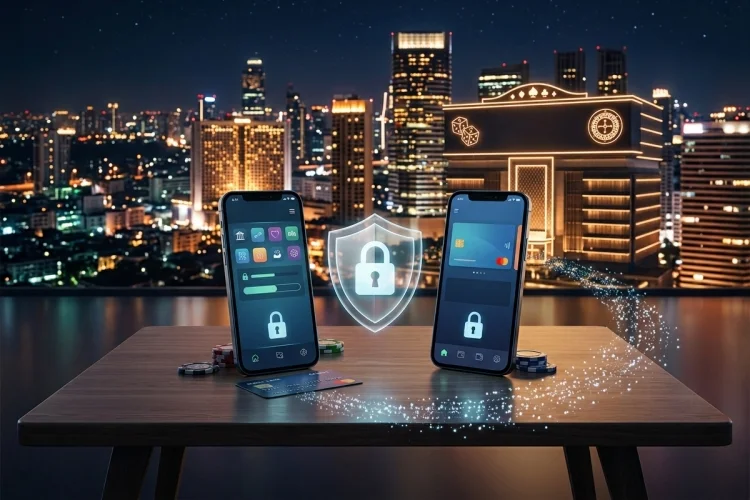
Payment security is not only about encryption.
For online casino users, it also means choosing a licensed operator, protecting login credentials, using a payment account in the correct name, understanding withdrawal rules, and keeping gambling money separate from essential expenses.
The bank transfer vs e-wallet casino payments comparison reveals two different security models. A bank transfer relies on a regulated bank’s controls and creates a direct transaction trail.
An e-wallet places another provider between the casino and the main financial account, which can reduce how much underlying payment information is shared at individual websites.
Neither method can make an unsafe casino trustworthy. A secure wallet or banking application still creates risk when an operator is unlicensed, cash-out terms are unclear, or verification requirements are ignored.
The strongest approach combines a reputable provider with secure account habits, realistic spending limits, and a casino authorised for the player’s jurisdiction.
How Bank Transfer Security Works
Bank transfers normally require approval through a bank website or mobile application. Transactions appear in the user’s banking history, making deposits easier to track and review.
The direct route also requires accurate account details and payment references. Errors can delay allocation or send money to the wrong destination.
Instant banking increases convenience but reduces the time available to notice a mistake. The European Central Bank says instant transfers can make funds available within seconds, 24 hours a day and throughout the year. Users should therefore verify recipient details before confirming.
How E-Wallets Protect Payment Information
An e-wallet stores or links payment information and lets users approve transactions through the wallet account. This can reduce the need to provide underlying bank or card details directly to each casino.
Digital wallets commonly use encryption and account-security controls to protect stored information. Some providers also offer transaction alerts and gambling controls. Neteller, for example, provides a block that can stop wallet payments to gambling merchants.
The extra account creates another password and recovery process to secure. Reusing credentials or ignoring multi-factor authentication can weaken the privacy benefit.
Account Ownership and Closed-Loop Payments
Players should use a bank account or wallet registered in their own name. Third-party deposits can trigger fraud concerns, ownership disputes, or enhanced checks.
The UK Gambling Commission notes that operators commonly restrict third-party payment methods because they create financial-fraud risks.
Many casinos also try to return money to the method used for the deposit. The Commission describes this closed-loop approach as good practice for reducing money-laundering opportunities.
A player who deposits by e-wallet may therefore need to withdraw to that wallet before transferring funds to a bank.
Verification and Withdrawal Reviews
Online casinos may verify identity, age, address, and payment ownership. The UK Gambling Commission says remote gambling businesses must verify age and identity before customers gamble.
Additional checks may still occur when transactions are unusually large or inconsistent with previous activity. Operators can request proof of account ownership, bank statements, or source-of-funds information to meet legal obligations.
Complete standard verification early and upload documents only through the casino’s secure account portal. Never send identity files, passwords, or one-time security codes through informal chat channels.
Choosing the Safer Option
1. Choose Bank Transfer When…
A bank transfer may be preferable when clear bank records, direct authentication, and larger limits matter most. It can also help users see gambling transactions alongside other spending.
2. Choose an E-Wallet When…
An e-wallet may be preferable when users want separation from their main banking details, rapid checkout, and provider-level controls. It is most effective when protected by a unique password and multi-factor authentication.
In both cases, verify the casino’s licence, read its withdrawal policy, and confirm that the selected method supports cash-outs. Avoid public Wi-Fi when accessing casino or financial accounts.
Safer Spending Controls
Payment safety also means protecting the amount available to spend. E-wallet deposits can feel effortless, while instant bank payments can encourage quick repeat transactions.
GambleAware recommends setting a spending limit before gambling and committing to it. Users can combine this with casino deposit limits, bank gambling blocks, or wallet restrictions where available.
A payment method should support a budget, not provide a way around it. Gambling should never be used to recover previous losses or solve financial pressure.
Bank transfer vs e-wallet casino payments is not a contest between one safe method and one unsafe method. Bank transfers offer direct bank authentication and a visible financial record.
E-wallets add privacy and convenience by separating the casino from underlying payment details, but they create another account that must be protected.
Choose a licensed casino, confirm closed-loop withdrawal requirements, and understand every fee and limit before depositing. Use only an account in your own name, activate strong authentication, and set a spending limit you can afford.
For additional control, consider casino deposit limits or a bank or wallet gambling block. Good payment security begins before the first transaction, not after a withdrawal problem appears.